
Two homes, one continuous daily routine for the child
When a child lives in two places, simple shared agreements can reduce the practical burden without making the homes identical or placing the coordination on the child.
Published August 31, 2026 · Gatherheart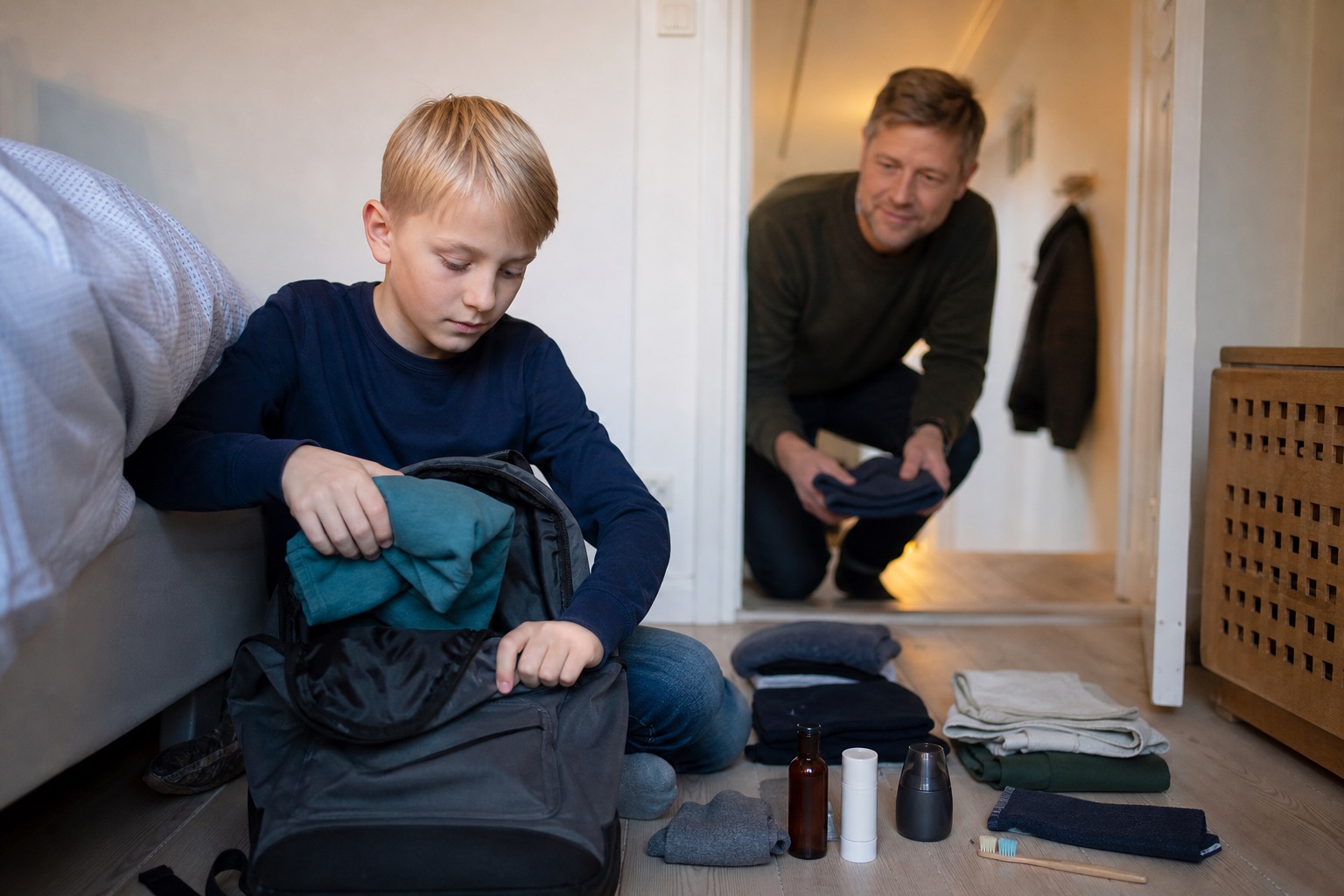
A child moving between two homes doesn't just change their address. Sportswear, chargers, medicine, shoe laces, and appointments need to be kept up while everyday life continues. It can be challenging, even when the child loves both homes.
The practical aspect is the responsibility of the adults. Depending on the age, the child can help pack and remember things, but should not act as a messenger between the parents or bear the consequences of unclear agreements.
Identify the things that cause the most friction.
Don't start with a big set of common rules. Look at the recent changes: What was forgotten? What information was delayed? Was it the school computer, the football boots, or the message about a changed training time?
Choose one recurring challenge and create a practical solution. Some things can be found in both homes. Others require a fixed checklist or an agreement on who controls what. Medicines and other important matters always require special adult attention.
Make the child a participant - not a project manager
An older child can put on their sports gear and mark an activity as done. However, an adult should ensure that the necessary information has been shared and that the child is not reprimanded for something that the adults did not coordinate.
Also ask the child what they find difficult. It could be something other than what the parents see. Maybe the problem isn't the bag itself, but that the favorite book is always in the wrong place, or that the change day is packed with too many other demands.
Maintain space for two distinct homes.
Connection doesn't mean identical routines. Bedtimes, eating habits, and the way to divide small tasks can be different. A common structure is most valuable around the conditions that the child otherwise has to carry between homes: school, health, leisure appointments, and necessary belongings.
Avoid using a shared task list to monitor the other household. The goal is to help the child, not to document who does things "right". Keep the descriptions neutral and practical.
Establish a calm transition routine.
A simple sequence can make the transition less hectic:
-
Check out the school and activities for the next day.
-
Pack the few things that are not in both homes.
-
Check for necessary messages and medication as an adult.
-
Give the child time to say goodbye without any last-minute tasks.
The family law office emphasizes that life across two homes requires cooperation from both children and parents, and that the child's everyday life must be able to fit together. This is a good guideline: a solution is not good because it looks effective, but because it facilitates the child's transition.
The Hjerterum can be used for the child's own neutral reminders in the family profile where it makes sense. Sensitive communication between adults and legal agreements are not part of the child's tasks.