
Reward chart for children: How to get started
A practical step-by-step guide to a reward chart that makes tasks clear and motivates without creating daily negotiation.
Published September 14, 2026 · Gatherheart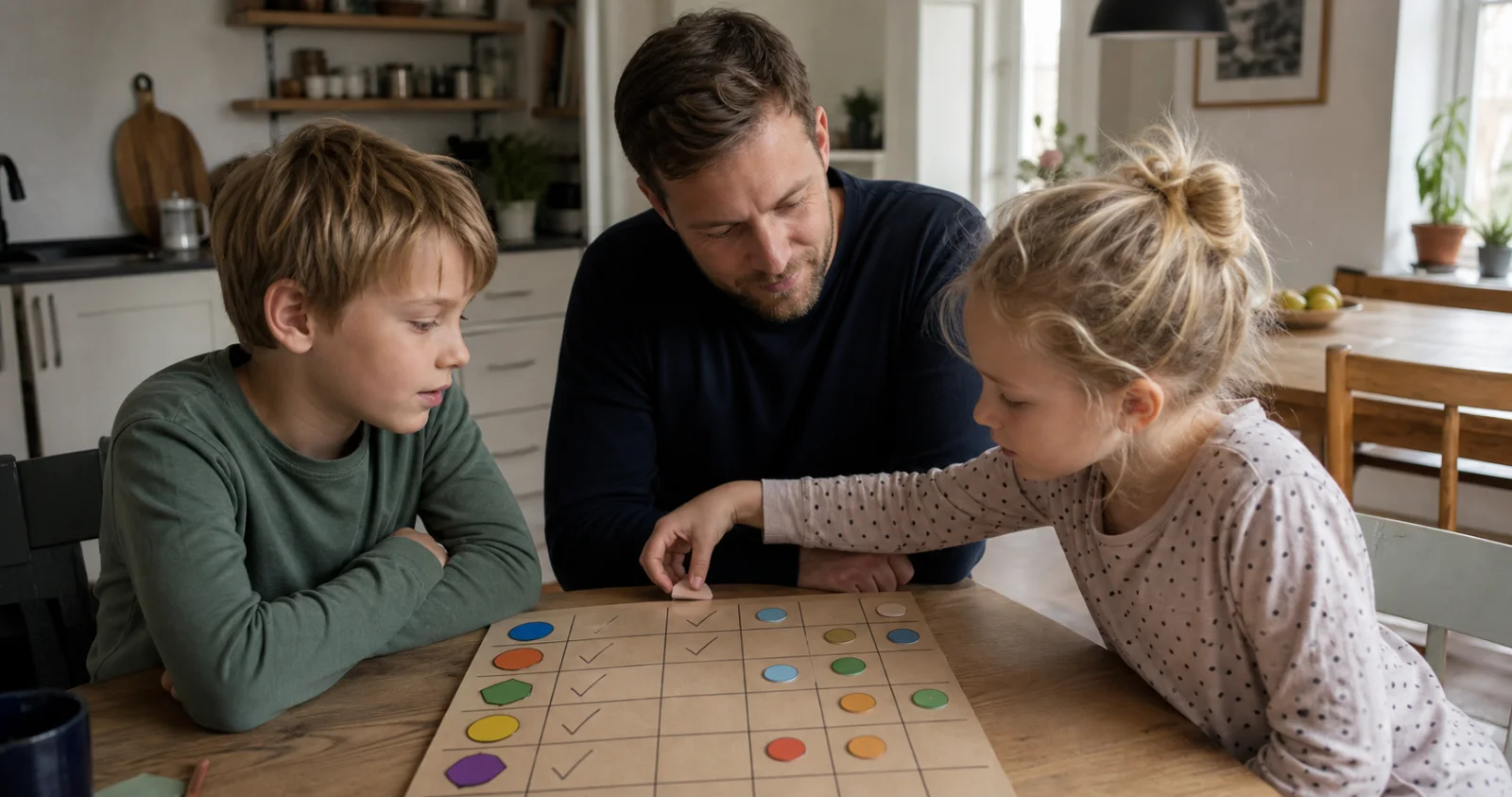
A reward chart for children can provide reassurance because the child can see what is expected and what effort leads to. But it works best when it is simple, predictable, and tailored to the child - not when it becomes another system that the adults have to remind them of all the time. In this guide, you will get a concrete first version that can be set up in under half an hour. The goal is not to buy help, but to make responsibility visible and give the child an experience of progress.
In short: a reward chart for children
A reward chart connects a few clear actions with a visible record and an agreed reward. The action could be tidying up, packing the school bag, or helping with the table. The record could be stickers, stars, points, or digital hearts. The reward could be a small benefit, shared decision-making, or something the family does together.
The most important thing is that the solution is experienced as support and clarity – not as a judgment on the child. A board or app can make expectations visible, but the relationship, the help, and the concrete recognition are still what make everyday life work.
Why this method can be suitable for a busy family
This method is particularly effective when the child knows how to perform a task but struggles with remembering the sequence or getting started. The board moves the reminder away from the adult's voice and into a shared system. This can reduce repetition and make it easier to praise the exact effort the child has actually made.
A good arrangement also makes it clear what the adults are responsible for. Children should contribute at a level that matches their age, energy, and skills; they should not bear the burden of the family's operations. If you are unsure about the level, you can start with our guide to age-appropriate tasks for children and motivation without scolding.
How to set it up
Start small and agree on when to review the arrangement again. Use these steps as the first version:
-
Select a maximum of three actions in the first week.
-
Clearly describe when a task is completed.
-
Agree on a single number of points or hearts per task.
-
Choose one small and one shared reward.
-
Involve the child in choosing the appearance and symbols.
Write the task as a visible action. "Help more" is difficult to succeed with, while "put your plate in the dishwasher after dinner" can be understood and completed. Also, choose who approves and whether the child marks the task as completed themselves.
An example from a typical week
A family chooses "clothes in the basket," "plate in the dishwasher," and "bag ready." Each action earns one heart. With five hearts, the child chooses Friday's dessert, and with fifteen hearts, the family chooses a shared Sunday outing. The adults don't mark mistakes with negative points; a forgotten task just doesn't earn a heart that day.
The example shows why an electronic reward chart can be practical: repetitions, points, and common goals can be kept together without an adult having to draw a new chart every week. However, the digital solution should be short on the screen. The child should be able to see the next action, record it, and return to everyday life.
Balance between reward and intrinsic motivation
Use the reward as the starting point for a new routine. As the action becomes known, the recognition can fill more than just the points. For example, say: "You put out the plate yourself; it made cleaning up faster for all of us." This helps the child connect the action with the community.
Therefore, also talk about the impact: Who was helped? What became easier? What did the child learn? When points are accompanied by such a conversation, the reward becomes a visible sign of effort rather than the whole reason for helping.
Common mistakes you can avoid
-
Too many tasks from the first day.
-
Unclear goals such as "be nice" or "be good".
-
Rewards that require so many points that they feel unattainable.
-
Taking back already earned points as a penalty.
If the system leads to more discussions than before, it's a sign to simplify it. Remove tasks, temporarily lower the requirements, or let the child choose a new reward. A reward system is a tool, not an agreement that must never change.
A simple evaluation after seven days
Set aside ten minutes and ask: Could the child see what needed to be done? Was the task realistic? Was the recording remembered? Was the reward attractive without being excessive? Keep what worked and only change one thing at a time. Then you can see which change actually helps.
Frequently Asked Questions
How many tasks should be on the board?
Start with two or three. More can be added when the child can explain the tasks themselves and remember to use the board.
Should all tasks give the same reward?
No. A longer or less attractive task can indeed yield more, but the difference should be easy to understand.
How long should the board be used?
As long as it provides clarity. When a routine is running smoothly, it can be phased out or replaced by a new one.
Next steps
Choose one specific situation from the upcoming week and create the simplest version of a reward chart for children. Once it works consistently, you can expand it with another task or a shared reward. Hjerterum allows children to collect tasks, hearts, and rewards digitally, but the foundation remains the same: clear expectations, appropriate responsibilities, and warm recognition.