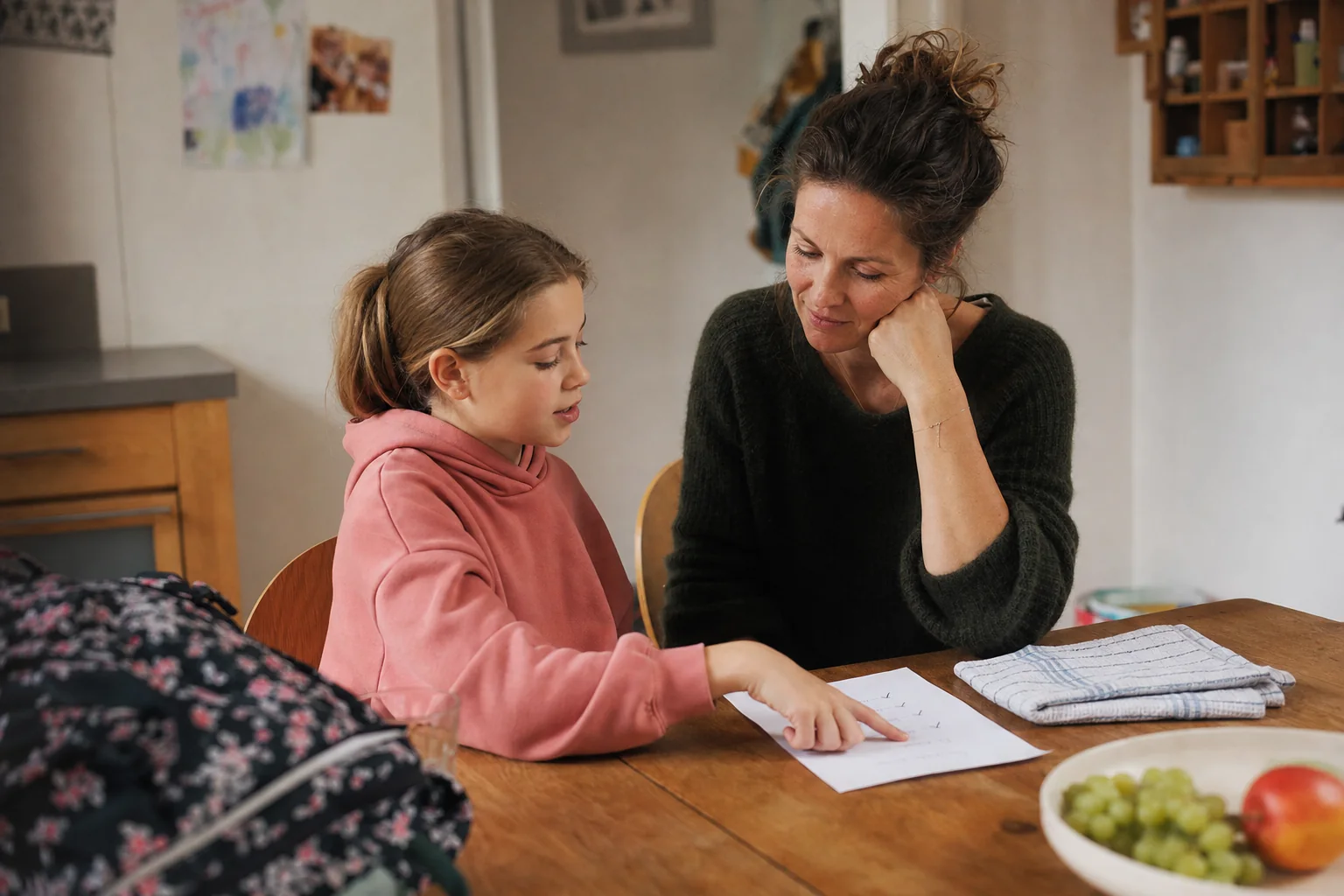
How to get children to help more at home - without daily conflicts
Get concrete advice on how children can take more responsibility for the family's tasks, without everyday life becoming filled with repetitions, scolding, and conflicts.
Published July 20, 2026 · Hjerterum
When children help at home, it's not just about doing the dishes or tidying up their room. They also learn to take responsibility, cooperate, and feel that their efforts matter to others. Yet, the practical tasks often end up being easily repeated with reminders and conflicts.
Here you will find a simple approach that can make the family's tasks more manageable and positive.
Make the task clear and specific.
"Help a little bit" can mean many different things. A child finds it easier to get started when the task is concrete: "Put the plates and glasses on the table before 5:30 p.m." or "Put the clean laundry away".
Adapt the task to the child's age and show them how to solve it for the first time. The goal is not for everything to be perfect, but for the child to gradually become more independent.
Let the child choose from several tasks
Participation gives ownership. Try giving the child two or three relevant options instead of giving them one specific task. It can be the difference between feeling like you're being commanded and feeling like you're contributing yourself.
A shared task overview makes it easier for everyone to see what is missing and who is already working on it. At the same time, parents no longer have to be the only reminder in the family.
Recognize the effort – not just the result
Children become more motivated when their contributions are seen. Concrete recognition often works better than a general "good job": "Thank you for setting the table. It gave me time to finish cooking."
Hearts or points can make the effort visible, but they should be followed by words and community. The reward doesn't have to be one thing either. It could be choosing Friday's movie, having extra reading time together, or saving up for a shared experience.
Create consistent, realistic routines.
Some tasks work best as good habits. It could be packing your school bag, reading for 20 minutes, or helping with dinner on certain days of the week. Start with a few routines that actually work, and only expand when they become a habit.
If the family's plans change, there also needs to be room to skip a task. Flexibility makes the system more credible than a long list of tasks that never get done.
Make room for helping each other
Not all tasks have to be solved alone. A child can help a sibling or a parent, and adults can take over when the day becomes too hectic. When more people solve the task together, children learn that responsibility is not just about the individual, but about the whole family.
Avoid turning hearts into currency for everything.
A point system works best as visible recognition and motivation, not as payment for every little action. Talk to the children about how everyone in the family helps because they belong. Hearts are a way to celebrate effort and make progress clear.
Start simply: choose three to five tasks, agree on how to divide them, and follow up after a week. Ask the children what worked and what was difficult. This way, the family's tasks become a joint project instead of another source of conflict.