
From hearts to a shared experience: Make the goal concrete.
A common goal works best when the family can see both the path and the purpose — and when every contribution counts without pressure to perform the most.
Published August 20, 2026 · Hjerterum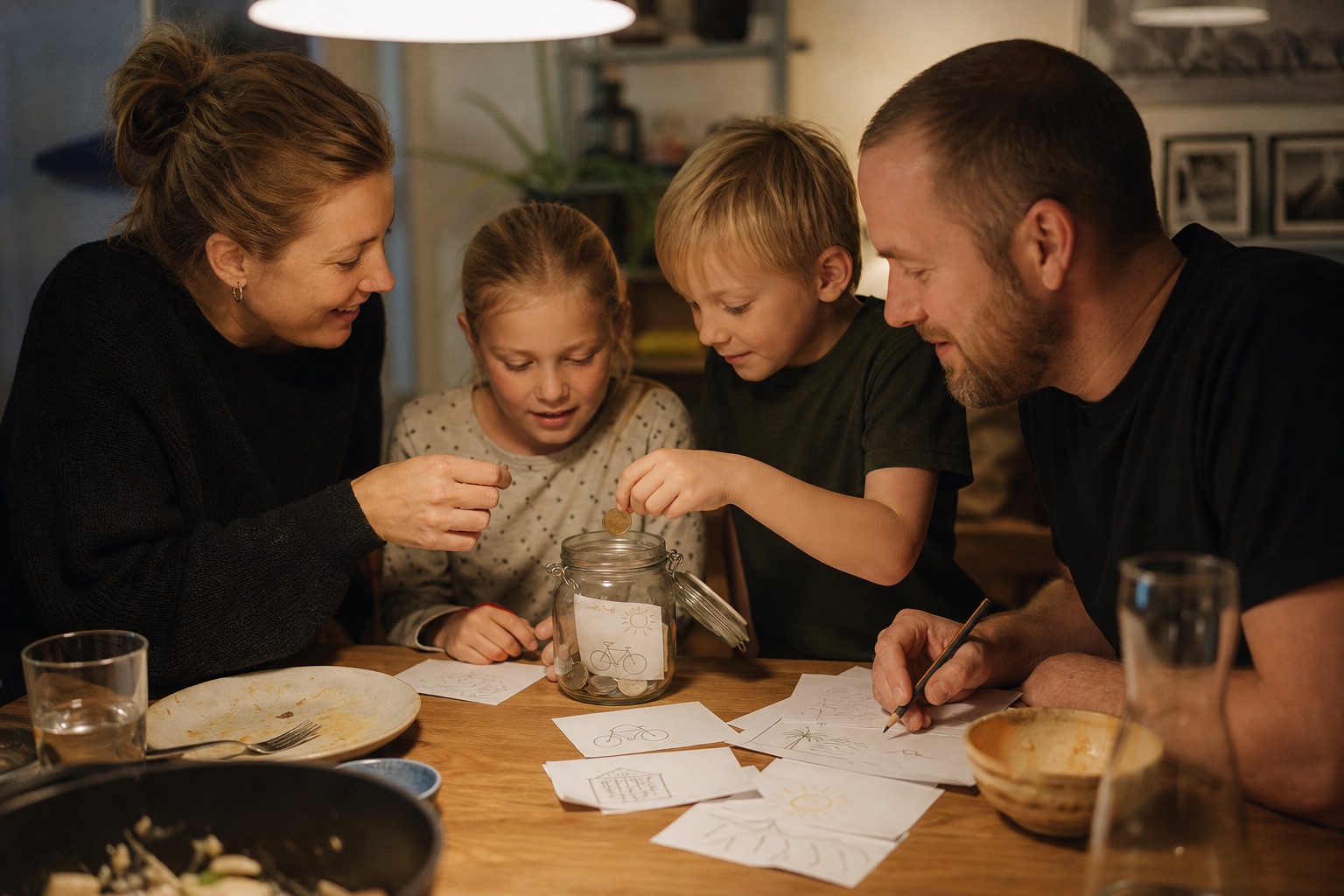
"We'd like to do something nice together" is a good intention, but a vague goal. When the family makes the experience concrete, it becomes easier to collaborate: What are we looking forward to? What does it require? And what small contributions can lead us there?
A common goal doesn't have to be expensive. It could be a bike ride with a picnic, a movie night chosen in turn, a trip to the pool, or time and materials for a joint project. The value lies in the expectation and the shared direction.
Choose the goal together.
Gather a few realistic suggestions and let everyone speak up. Younger children can choose from pictures, while older children can help research prices, transportation, and opening hours. The adult sets the framework for finances and the calendar.
If one person's wish always wins, the goal is not truly shared. Consider using a sequence so that the family takes turns choosing, or find an experience with multiple interests.
Showcase progress without highlighting differences
A simple tally, jar, or digital meter can show that the family is getting closer. Avoid a public ranking of who has contributed the most. A toddler and a teenager don't have the same opportunities, and the adult's responsibilities aren't directly comparable.
Instead, talk about the total: "Now we've reached half together." If the family uses hearts, the number should be understandable so that the goal is neither reached in one day nor feels infinitely far away.
Preserve volunteerism in the donation
Personal hearts can also be connected to something the child is looking forward to. A shared goal works best when the child chooses to donate rather than being pressured. Parents can agree on other ways to contribute so that the shared experience doesn't depend on one child giving up all their own wishes.
If a child regrets a donation, use the situation to talk about agreements and choices without shame. Rules should be clear in advance, especially for younger children.
Remember to complete the experience.
Once the goal is achieved, the family should set a date as soon as possible. Otherwise, the reward could become a new adult task that disappears from the calendar. Take a picture or write a small note afterward if the family wants to—not as proof, but as a conclusion to the shared story.
The common goal of the Hjerterum can collect donations and show progress. Describe the experience concretely and feel free to add what happens when the goal is reached. This makes the connection between today's small contributions and the shared joy clear.