
Make Everyday Movement a Family Habit Without Exercise Pressure
Movement does not require sportswear or performance targets. Small active choices can become a natural part of ordinary family life.
Published August 6, 2026 · Hjerterum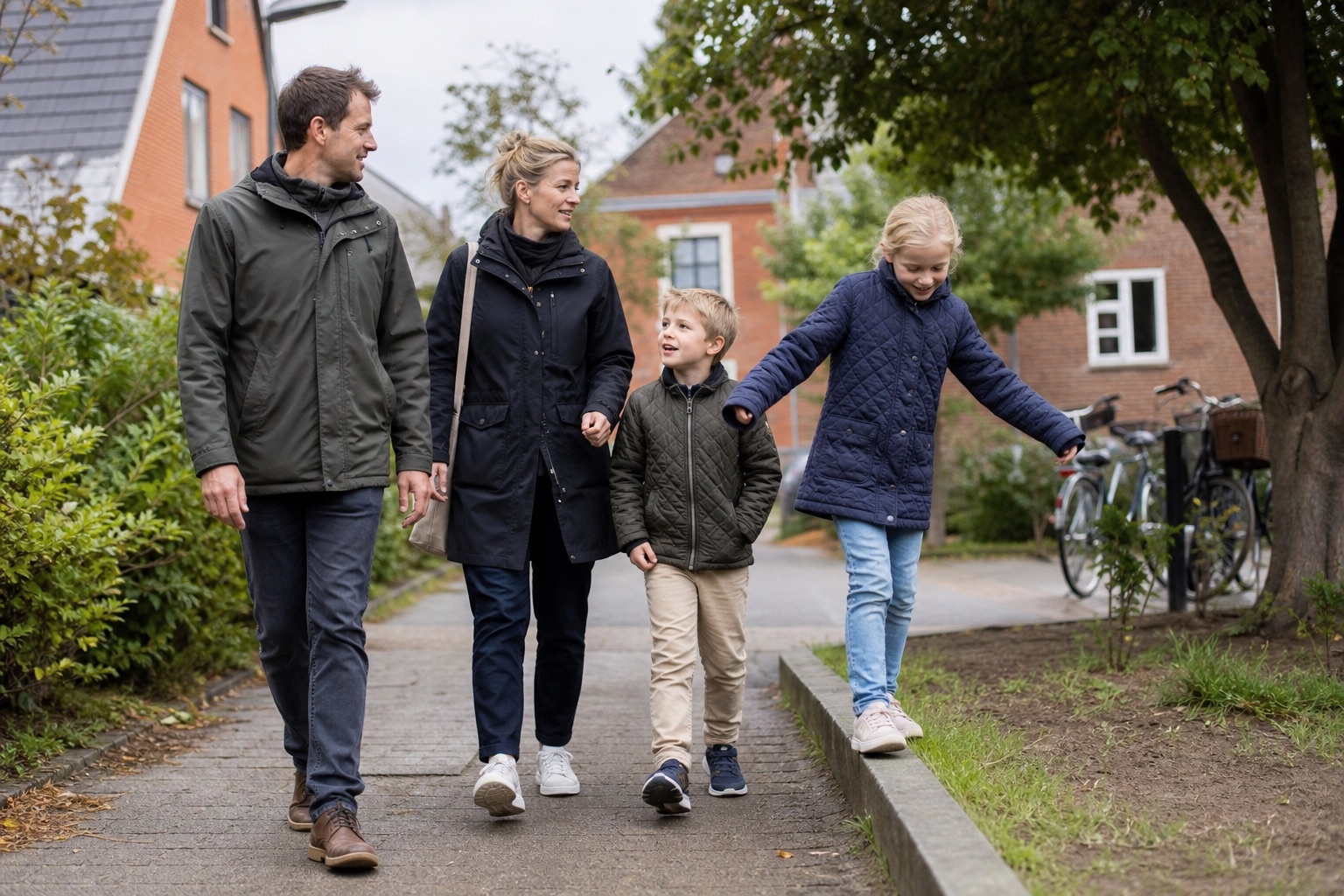
When families talk about movement, the conversation can quickly focus on training, distances and scheduled activities. But movement also happens on the walk to the library, through play on the way home, while cycling to a friend's house or during ten minutes with a ball outside.
That distinction matters for children who do not feel at home in organised sport. Everyday movement can be flexible, social and free from comparison. The aim is not to turn every step into a performance, but to create more situations where the body is used naturally.
Notice where your family already moves
Look at an ordinary week. Could you walk part of the school journey? Could a short car trip occasionally become a bike ride? Could waiting during a sibling's activity become a walk around the pitch?
Choose one change that fits something you already do. A grand plan for daily exercise rarely lasts if it requires new equipment, extra transport and a spare hour. Ten minutes that actually happen are a stronger beginning.
Let the child choose the activity
The same child may dislike running but love exploring a forest. Another may prefer dancing, skipping or carrying garden waste. Offer two or three realistic choices: “Would you like to cycle to the shop, walk the dog or play ball outside?”
The Danish Health Authority recommends daily physical activity for children and young people, while also emphasising that some activity is better than none and that it should be enjoyable and motivating. This leaves room to start small and build on what the child genuinely enjoys.
Do not let tracking become a judge
A habit tracker can help the family remember movement, but it should not decide whether a day was “good” or “bad”. Illness, weather, sleep and a demanding schedule all affect what is possible.
Talk about the experience instead: What felt good? When did you lose track of time? What would the child like to do again? Those answers help create a sustainable habit.
Count shared practical tasks as movement too
Some household tasks also get the body moving: vacuuming, cycling glass to a recycling point, collecting leaves or taking out rubbish. They may not replace play or more vigorous activity, but they show that movement does not belong only in a sports hall.
In Gatherheart, the family can create a habit with an open title such as “Move in a way you enjoy”. Add several ideas to the description so the child does not feel tied to the same activity every day.