
Bulletin board for children: 7 mistakes that make motivation disappear
A star chart can make progress clear, but small design errors can remove motivation. See the typical pitfalls and solutions.
Published September 18, 2026 · Gatherheart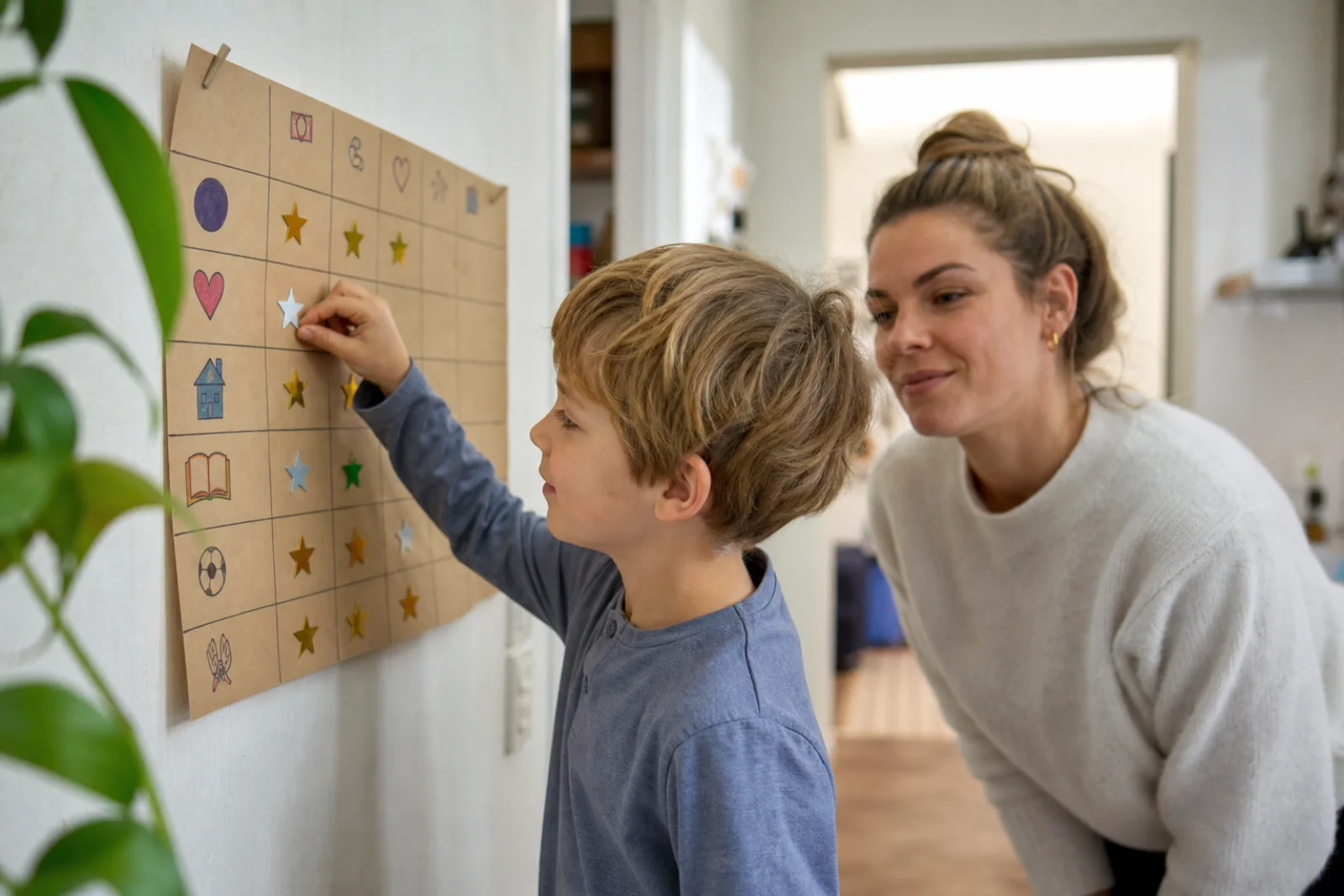
A star chart for children looks simple: perform an action, earn a star, achieve a goal. Yet, many charts end up hanging empty after just a few weeks. Often, it's not because the child lacks motivation, but because the chart has become too large, unclear, or slow. When you view the chart as a temporary learning tool, it becomes easier to adjust it without labeling the attempt a failure.
In a nutshell: a star chart for children
The star chart is a visual record where a specific action triggers a star or another symbol. It is most understandable when the child can quickly see the connection between action, marking, and the next small goal. The stars should show something the child did - not how "good" the child has been as a person.
The most important thing is that the solution is experienced as support and clarity – not as a judgment on the child. A board or app can make expectations visible, but the relationship, the help, and the concrete recognition are still what make everyday life work.
Why this method can be suitable for a busy family
Visual symbols can be very helpful for younger school-aged children and children who benefit from a clear sequence. The method requires the child to understand the task and have a real chance of success. If the goal is almost always missed, the task or time frame is probably too difficult.
A good arrangement also makes it clear what the adults are responsible for. Children should contribute at a level that matches their age, energy, and skills; they shouldn't bear the burden of the family's operations. If you're unsure about the level, you can start with our guide to fixed routines and overview and small choices and independence.
How to set it up
Start small and agree on when to review the arrangement again. Use these steps as the first version:
-
Choose one habit or up to three small tasks.
-
Place the star on the map after the event.
-
Make the first reward achievable within a few days.
-
Show exactly how many stars are missing.
-
Schedule a date to evaluate the board.
Write the task as a visible action. "Help more" is difficult to succeed with, while "put your plate in the dishwasher after dinner" can be understood and completed. Also, choose who approves and whether the child marks the task as completed themselves.
An example from a typical week
A child needs to remember the three steps of the morning. Instead of one star for a "perfect morning", a star is given when the child uses the picture list and completes the sequence with at most one help. After four stars, the child chooses music in the car. After two weeks, the requirement can gradually be changed to greater independence.
The example shows why an electronic reward chart can be practical: repetitions, points, and common goals can be kept together without an adult having to draw a new chart every week. However, the digital solution should be short on the screen. The child should be able to see the next action, record it, and return to everyday life.
Balance between reward and intrinsic motivation
Stars shouldn't become a public report card. Place the chart where the family can use it, but avoid having guests or siblings comment on missing fields. Focus on progress: "You used the list three times this week," rather than "You still have two missing."
Therefore, also talk about the impact: Who was helped? What became easier? What did the child learn? When points are accompanied by such a conversation, the reward becomes a visible sign of effort rather than the whole reason for helping.
Common mistakes you can avoid
-
Goals that depend on the child's emotions.
-
An entire week without the possibility of a fresh start.
-
The reward changes along the way.
-
Siblings have the same requirements despite different ages.
-
Stars are awarded several days later.
-
The board has too many colors and fields.
-
The adults forget to follow the agreement themselves.
If the system leads to more discussions than before, it's a sign to simplify it. Remove tasks, temporarily lower the requirements, or let the child choose a new reward. A reward system is a tool, not an agreement that must never change.
A simple evaluation after seven days
Set aside ten minutes and ask: Could the child see what needed to be done? Was the task realistic? Was the recording remembered? Was the reward attractive without being excessive? Keep what worked and only change one thing at a time. Then you can see which change actually helps.
Frequently Asked Questions
Can a Starboard be used without reward?
Yes. For some children, the visible range and the adult's acknowledgment are sufficient, especially for short distances.
What do we do with a free day?
Let the day be neutral. Briefly explain what made the task difficult and start again on the next opportunity.
Can the child put the star on?
Very much. The small action can strengthen ownership and make the registration more concrete.
Next steps
Choose one specific situation from the upcoming week and create the simplest version of a star chart for kids. Once it works consistently, you can add another task or a shared reward. Hjerterum allows kids to collect tasks, hearts, and rewards digitally, but the foundation remains the same: clear expectations, appropriate responsibilities, and warm recognition.