
The board of directors must lead - not solve all tasks themselves.
When the board has to both set the direction and perform every practical task, the overview disappears. Start by moving all clear, specific tasks out.
Published August 13, 2026 · Hjerterum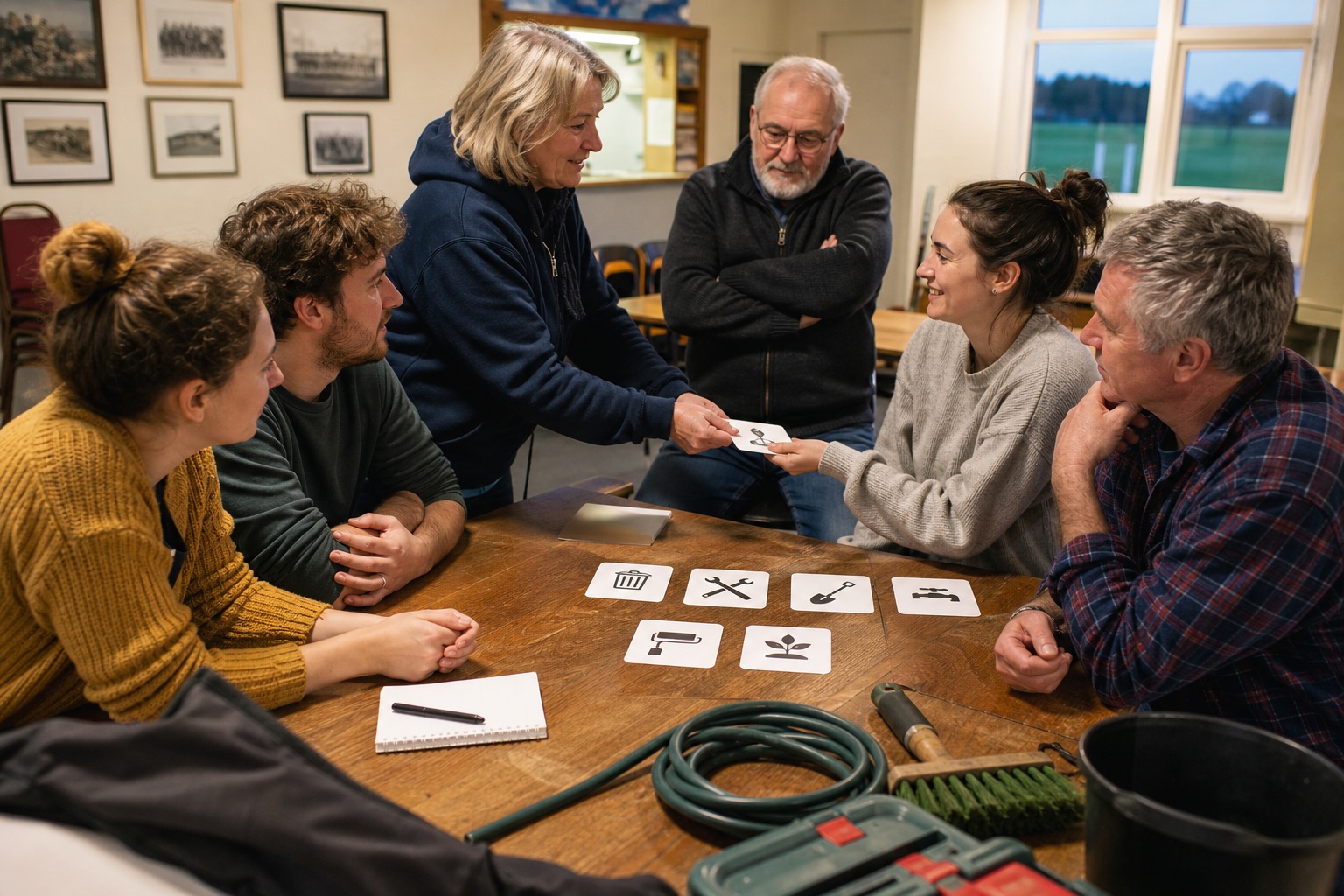
It often starts innocently enough. A board member buys coffee because it's the fastest way. Another takes another shift because no one answered. After a few months, the board knows everything, does most things, and has too little time for finance, development, and member needs.
Relief is not about passing on a pile of loose tasks. It's about creating tasks that others can actually take over without continuing to be guided step by step by the board of directors.
Find the tasks that don't require a board position.
Review a typical month and identify the tasks that require a formal decision, access to sensitive information, or financial authorization. The rest are candidates for volunteer teams or individuals.
Practical preparations, material checks, welcome guards, photography by appointment, and cleaning rarely require the contractor to be on the board of directors. However, the task must have a owner, a clear framework, and a contact person.
Move the entire process
If a member only receives the message "can you set up chairs?", the board will continue to work to discover the need, find the person, explain the time, and check the result. Instead, describe a complete process: number, locations, time, access, completion, and who to contact in case of problems.
Start with one recurring task. Once it works without daily board management, the next area can be moved. A major reorganization at once risks creating more questions than relief.
Delegate authority with responsibility
A volunteer in charge of materials should know what can be bought, where the limits are, and who approves exceptions. A committee should know its purpose and be able to make the small choices within the framework.
If the board reverses all decisions, the volunteers will quickly learn to wait. Therefore, agree in advance which decisions the group itself owns and when the board should be involved.
Stay connected without going back
Relief is not absence. A brief, consistent status update can provide support and catch issues early. Ask what the group needs instead of automatically taking over when something is taking longer than the board would have liked.
DGI points out that a board of directors should first and foremost lead, and that clear description and distribution of tasks can free up time for the core task. This requires a culture where it is normal for many people to contribute - and where the board dares to give room.
In Hjerterum Forening, tasks can be assigned to groups such as the board of directors, bar staff, or an event team. Use groups to place responsibility closer to those who can solve it, but still designate a clear person responsible for the entire process.