
Get a selection and team to help across the board.
Cross-cutting tasks can unite the association, but only if the purpose, decision-making space, and the connection back to the individual teams are clear.
Published September 10, 2026 · Gatherheart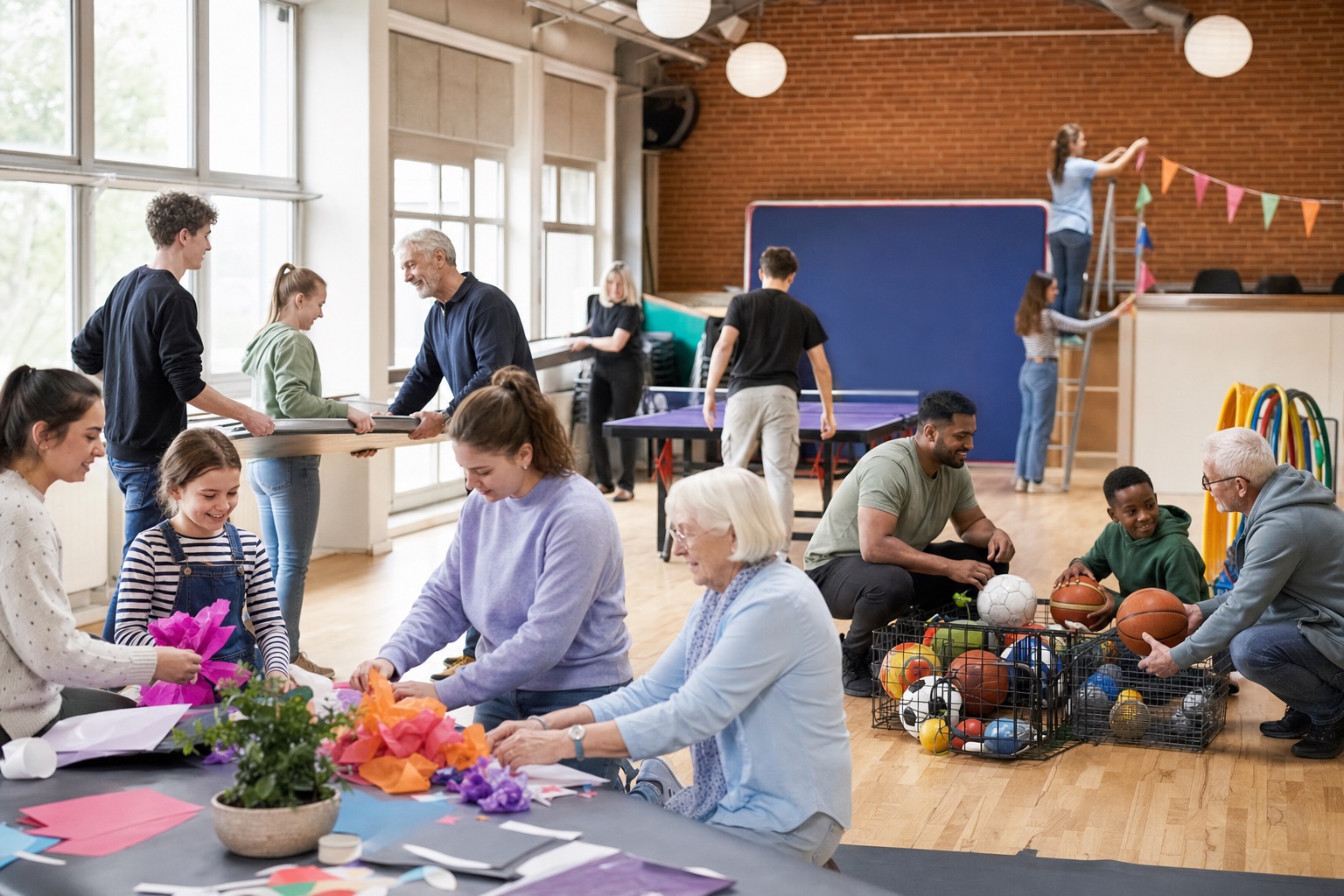
An event for the entire association often requires the help of people who usually work separately. Coaches, board of directors, youth committee, kitchen staff, and communication team each have their own rhythms and jargon. When they meet for a common task, the differences can both create new ideas and unnecessary misunderstandings.
Cross-functional collaboration doesn't just happen by putting everyone in a chat. The group needs to know what it's here to do and how members bring decisions back to their regular teams.
Start with a common result
Describe what the group should deliver: a successful family day, a joint materials day, or a welcome event for new members. Avoid a broad purpose like "better collaboration," which is difficult to translate into action.
Divide the result into areas with each having its own responsible person. This allows for expertise without creating parallel solutions to the same problem.
Make representation a task
A participant from a team must both bring knowledge and decisions back. Therefore, agree on what the person can decide on behalf of the team and when a vote is required.
Write short decisions with consequences and next steps. Long reports are rarely read by volunteers who were not present. A clear task with a deadline and contact information is easier to act on.
Avoid the same always representing
Cross-sectional groups can become another task for the most active. Invite based on relevant experience and interest, not just on existing title. A parent, young helper, or material volunteer may see practical aspects that the board overlooks.
At the same time, ensure a simple introduction so that new participants don't need to know the entire history of the association to contribute.
End the group when the task is completed.
Temporary teams should have a deadline. After delivery, experiences are gathered, unfinished tasks are placed, and access points are removed if they are no longer needed. Otherwise, the association will slowly grow into a landscape of groups without a clear purpose.
DGI points to self-managed committees, teams, and working groups as a way to clarify responsibilities and involve members. The key is that the organization follows a real task and does not become an end in itself.
In Hjerterum Forening, members can get more labels and thus see tasks from both their regular team and a temporary arrangement team. Use time-limited groups and clean up after the project.