
Evaluate the event while the experiences are still fresh.
Ten minutes of concrete debriefing immediately after an event can save the next team many hours of guessing — if the learnings are translated into changes.
Published August 29, 2026 · Gatherheart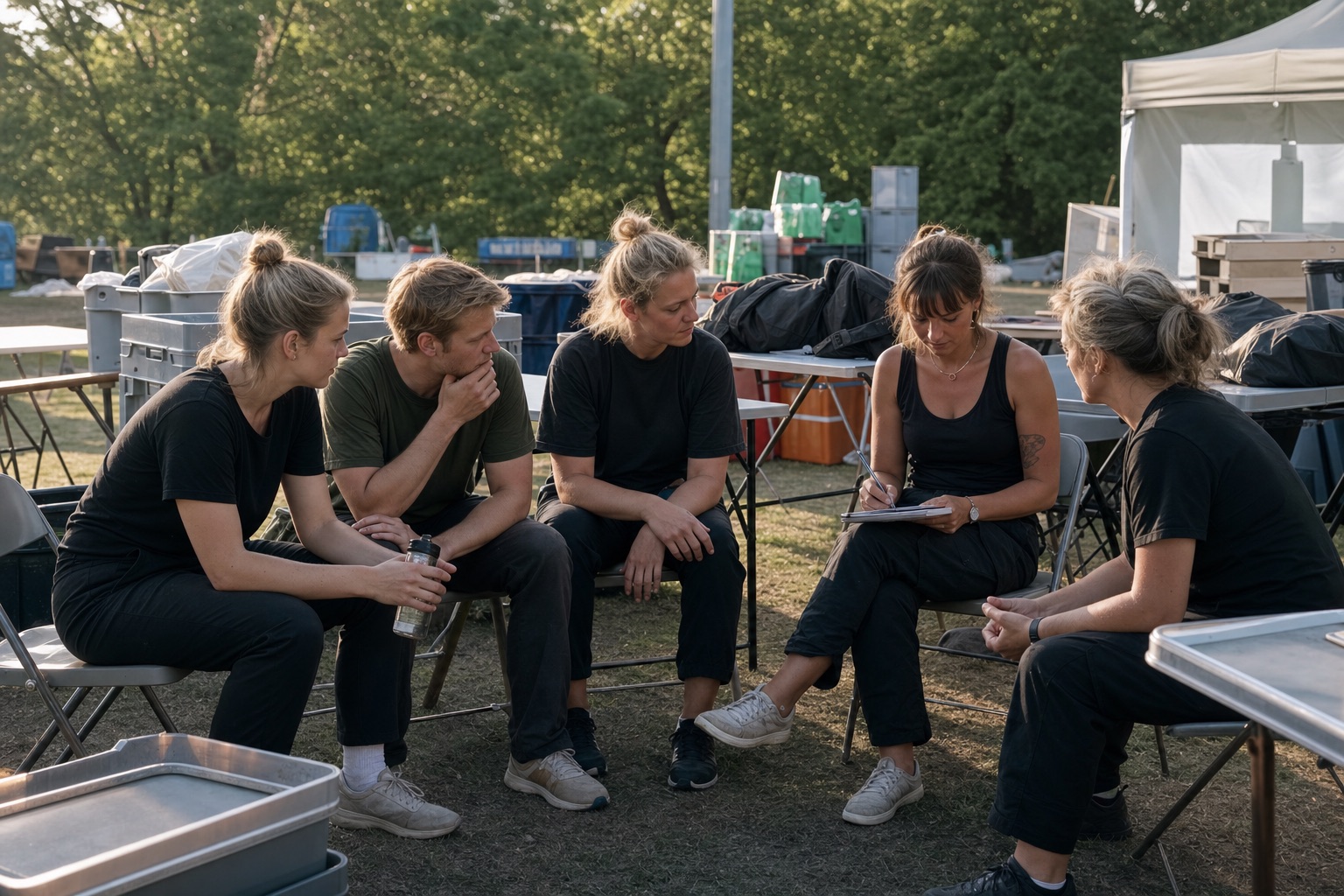
After an event, most volunteers would rather go home. The tables are folded up, the last guests have left, and the energy is spent. Therefore, the evaluation often ends up as a point on a meeting several weeks later, where the details have become unclear.
A brief recap on the same day can capture what might otherwise slip away: Where did the queue start? What equipment was missing? What message did the volunteers receive too late? If the questions are clear, a short meeting is not necessary.
Ask about the process, not the people.
Use three questions:
-
What should we repeat next time?
-
What made the work unnecessarily difficult?
-
What is the most important concrete change?
Avoid "who forgot...". Instead, ask how the task was described, placed, and assigned. The evaluation should improve the association's workflow, not identify a volunteer who is already in an unclear situation.
Collect both front and back scenes.
The person in charge may not see the same things as the parking attendant, the kitchen staff, or the person who greeted the participants. Allow each role to mention one observation each.
If the whole team can't be gathered, the volunteers can send their three responses by the next day. Keep the team format short. An open call for "all comments" often results in either silence or very long messages that are hard to act on.
Turn experience into ownership and a deadline.
"We need to be better at signage" is not a change. "Maja will update the signage task with the number, location, and time by September 1st" can be completed.
Select a maximum of three improvements. The rest can be saved as ideas, but if everything becomes important, nothing will change. Tell the volunteers later what their feedback led to. This shows that the evaluation was not just a polite conclusion.
Save the experience at the task
A report in an old email thread rarely helps the new team the following year. Update the specific task, checklist, or schedule while the context is clear. Remove outdated information instead of just adding another document.
DGI recommends evaluating and noting experiences for the next time as part of the association's planning. This practice works best when learning is closely tied to the work it is meant to improve.
In the Hjerterum Association, the final assignment can include the three evaluation questions. Create improvements as your own assignments with a responsible person and deadline, so that the next event begins with the learning that the previous one created.